Which agent spiked the bill?
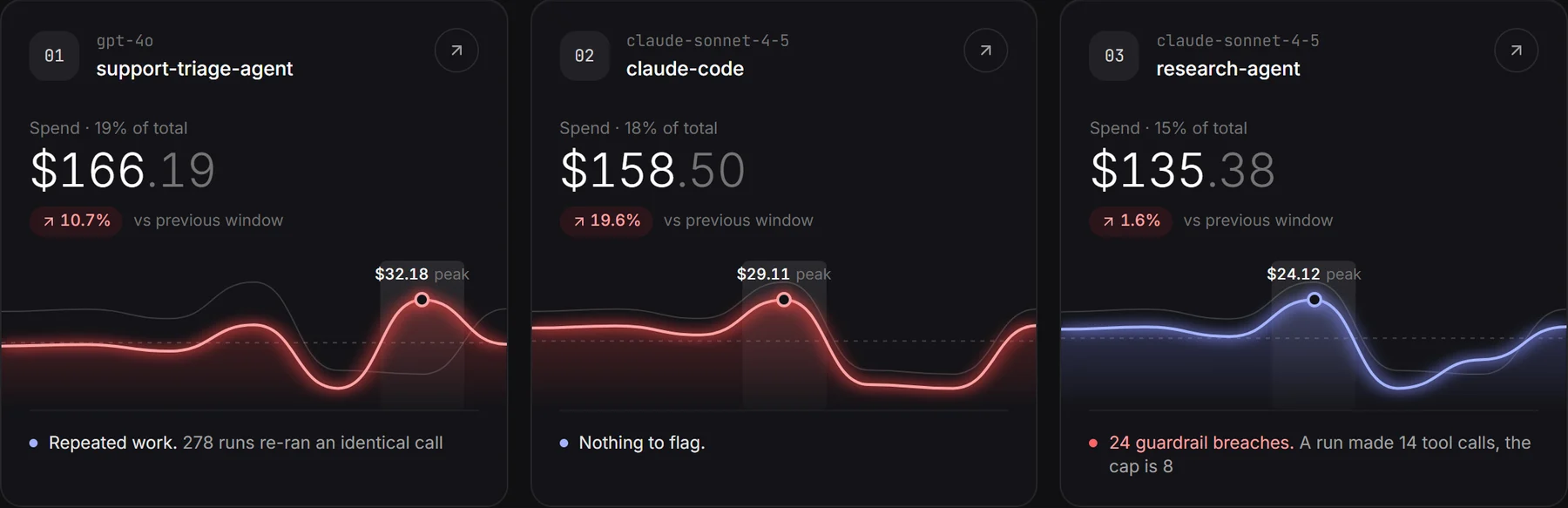
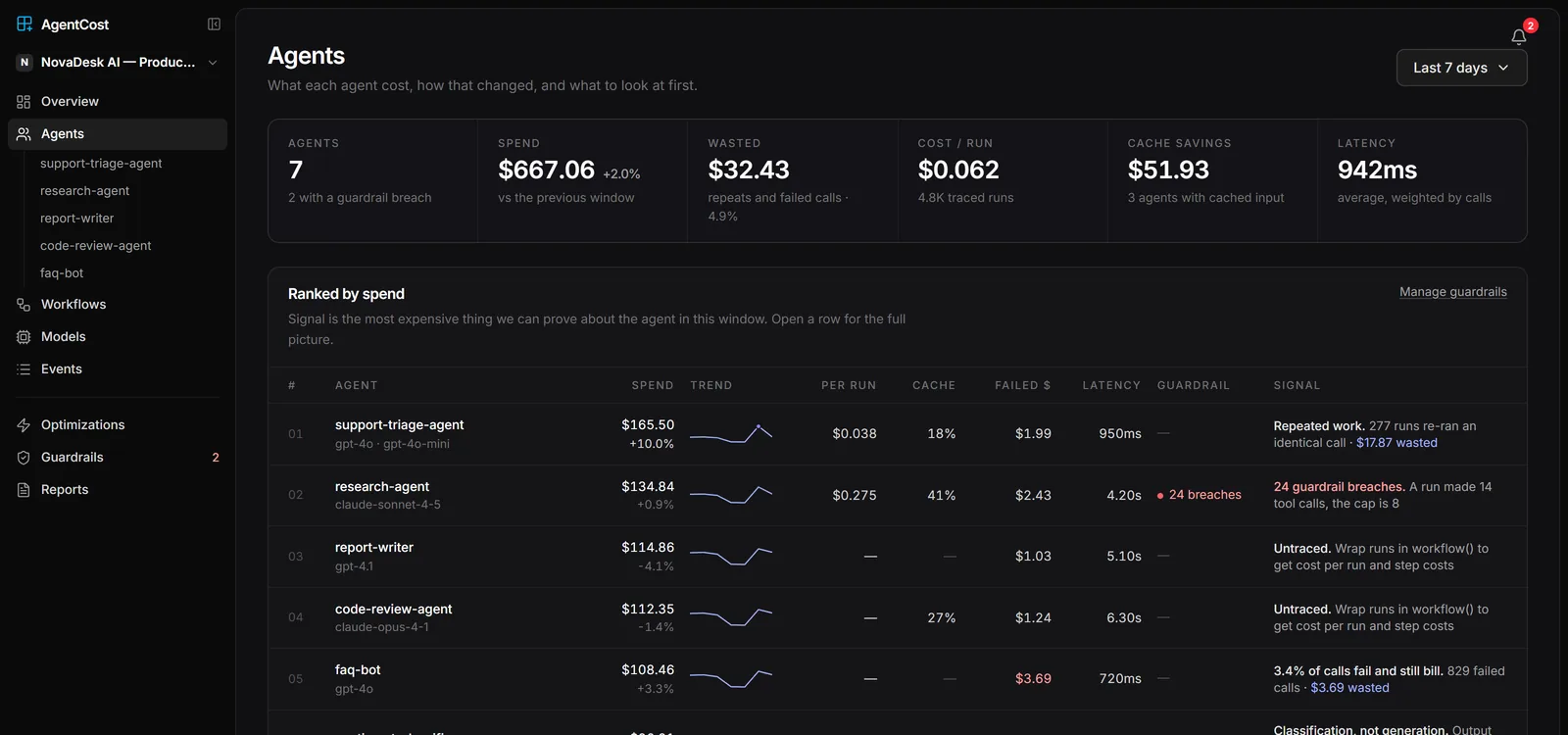
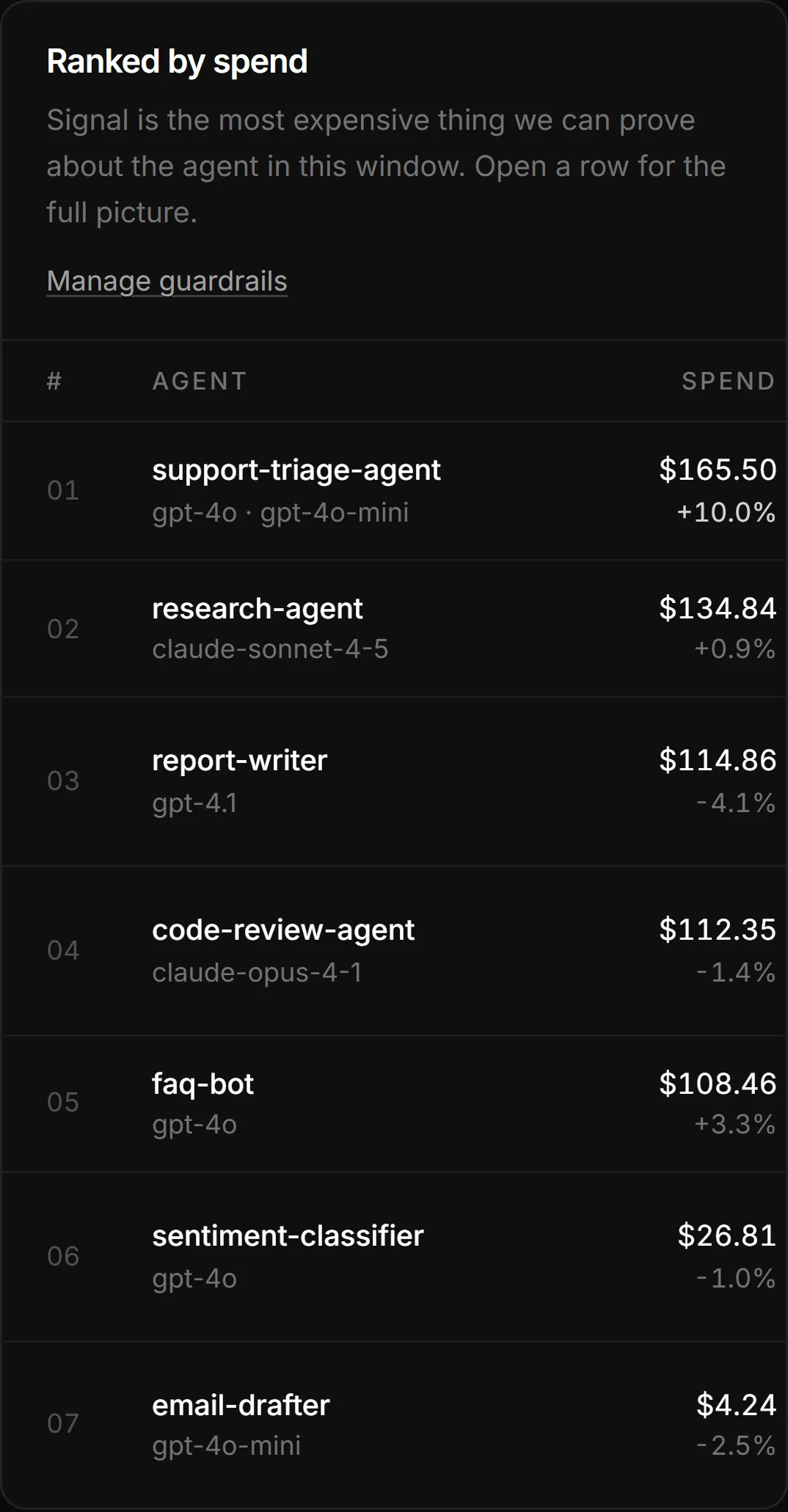
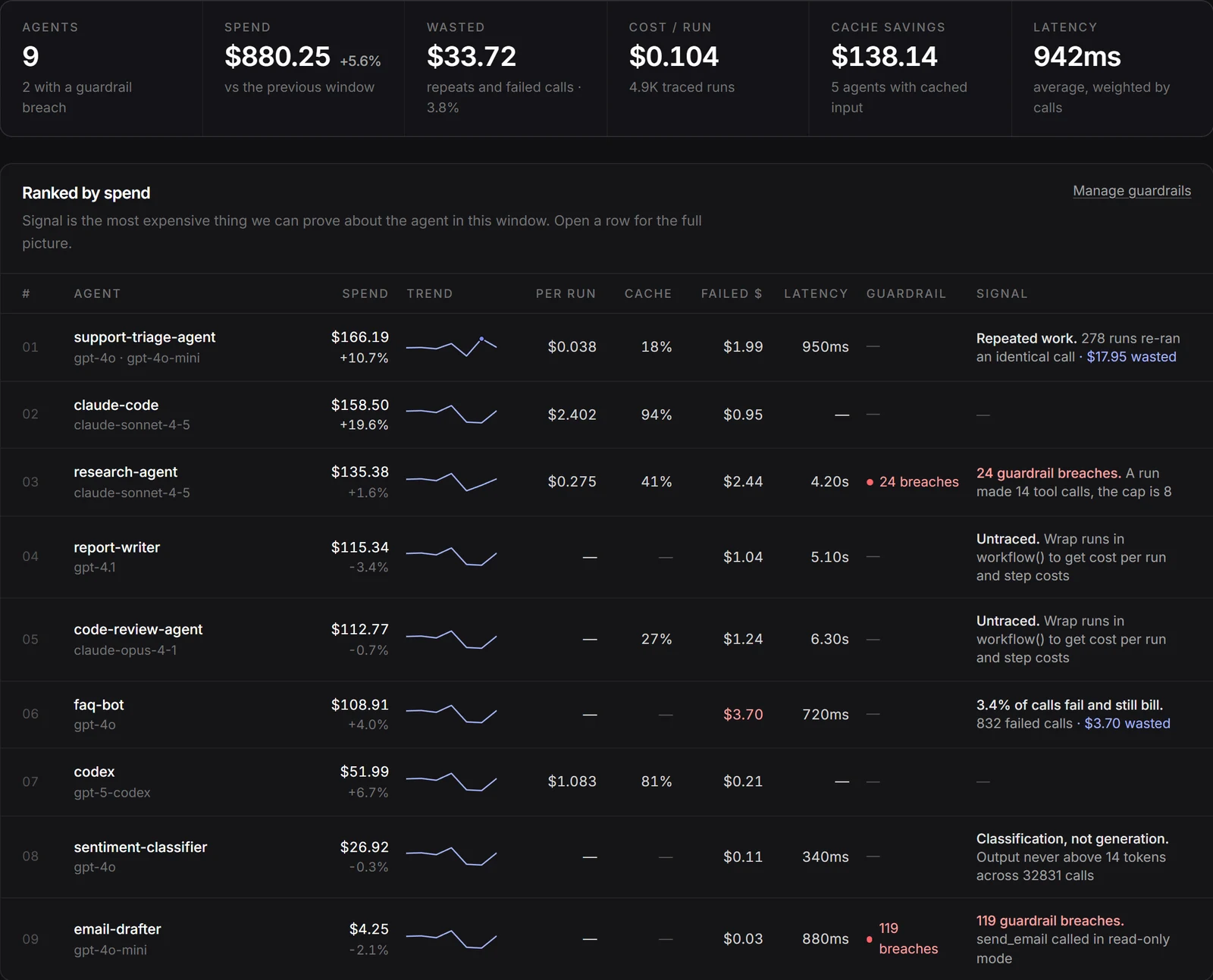
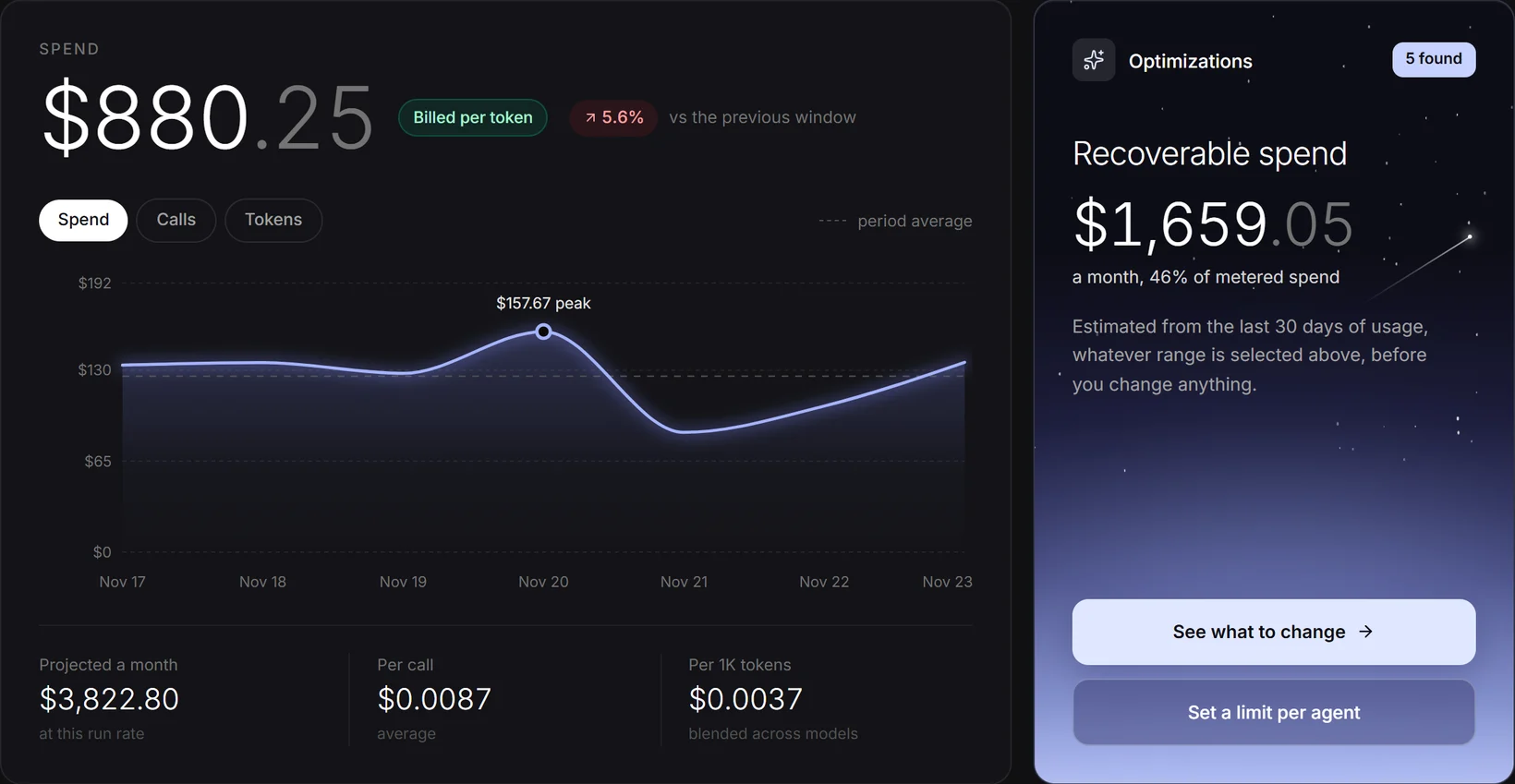
Every call priced and tied to the agent, model, workflow and developer that made it, even with twenty running at once. The one that moved is the one that's flagged.
Pick the one that sounds like you. Every answer uses live model prices or runs on your own machine.
Priced from the logs Claude Code, Codex and Antigravity already keep on your machine. No key, nothing sent.
Example: last 30 days, at API rates
$370.58
2,418 calls · 41 sessions
655 calls · 12 sessions
On a subscription, this is what the usage is worth, not a bill.
Tracks every major provider, 3,500+ models supported
Your invoice says what you spent. AgentCost answers who spent it, on what, and whether it had to.
Every call priced and tied to the agent, model, workflow and developer that made it, even with twenty running at once. The one that moved is the one that's flagged.
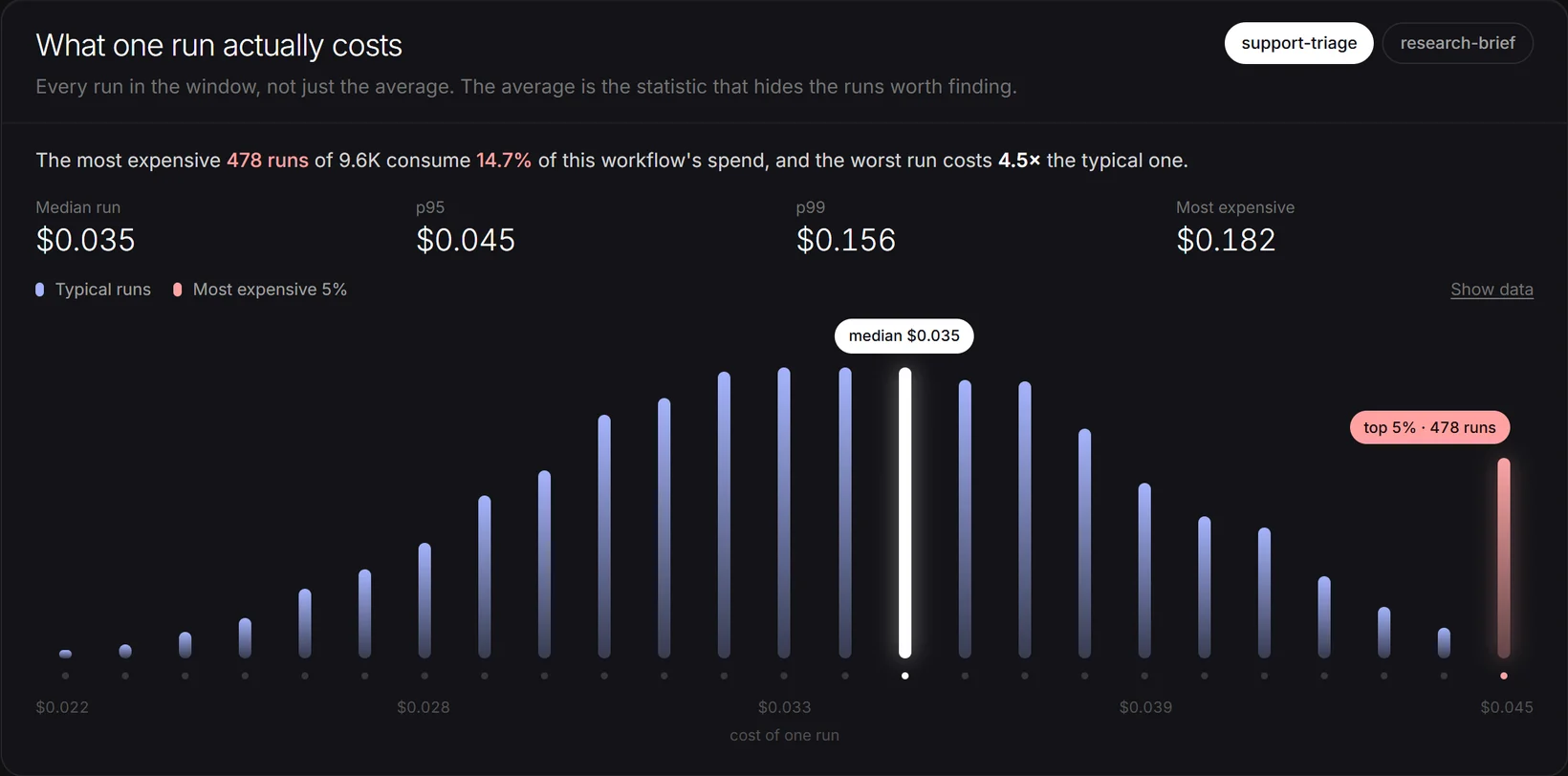
Every run priced, not just the average. The 478 runs that cost 4.5× the typical one, and the step looping inside them.
Calls that only ever classify, on a model priced to reason. Spotted from token counts alone, with the switch and what it saves.
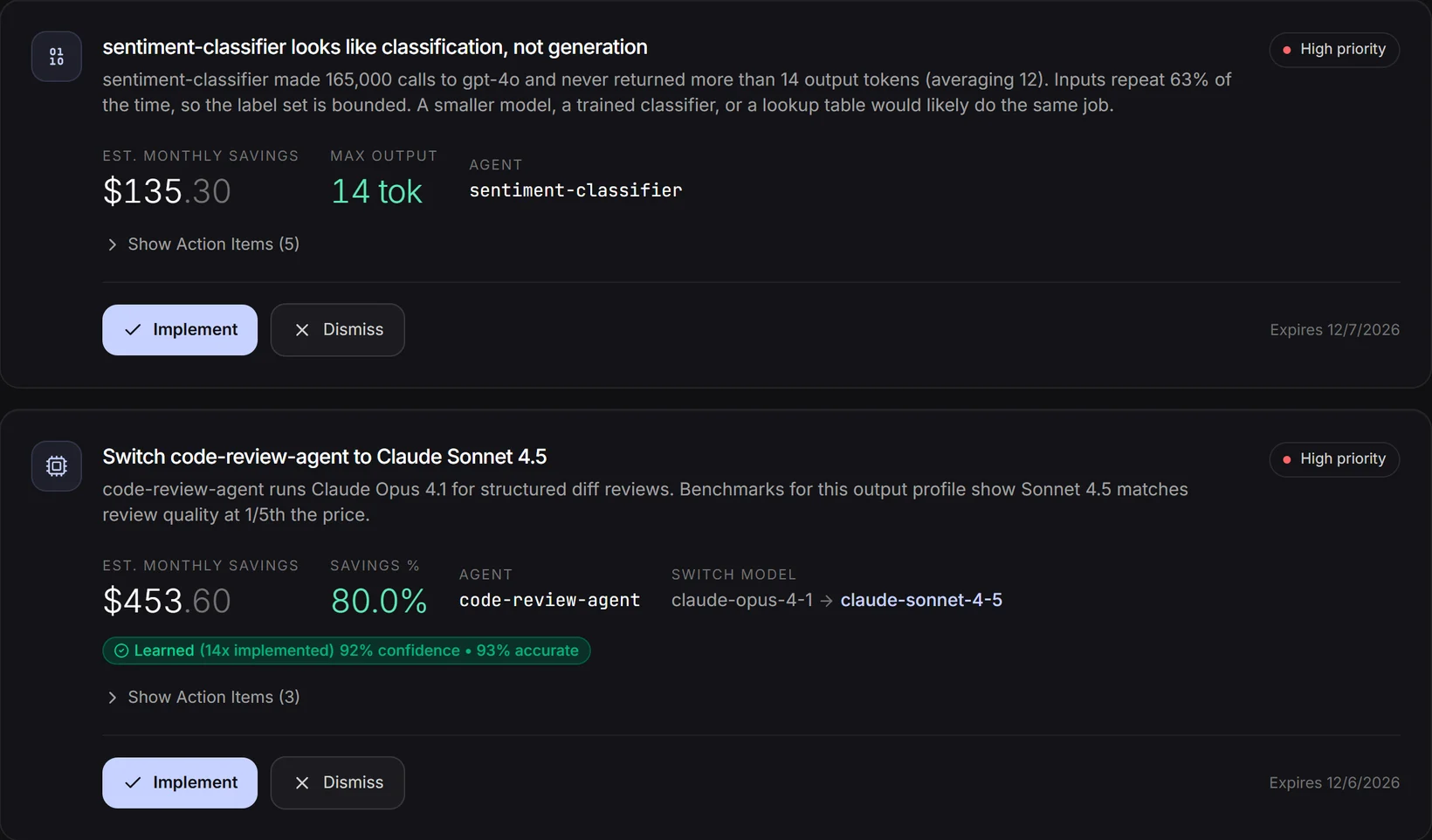
Declare which tools, models and cost per run each agent may use. On Claude Code and Codex, a call that breaks the rule is refused before it runs.
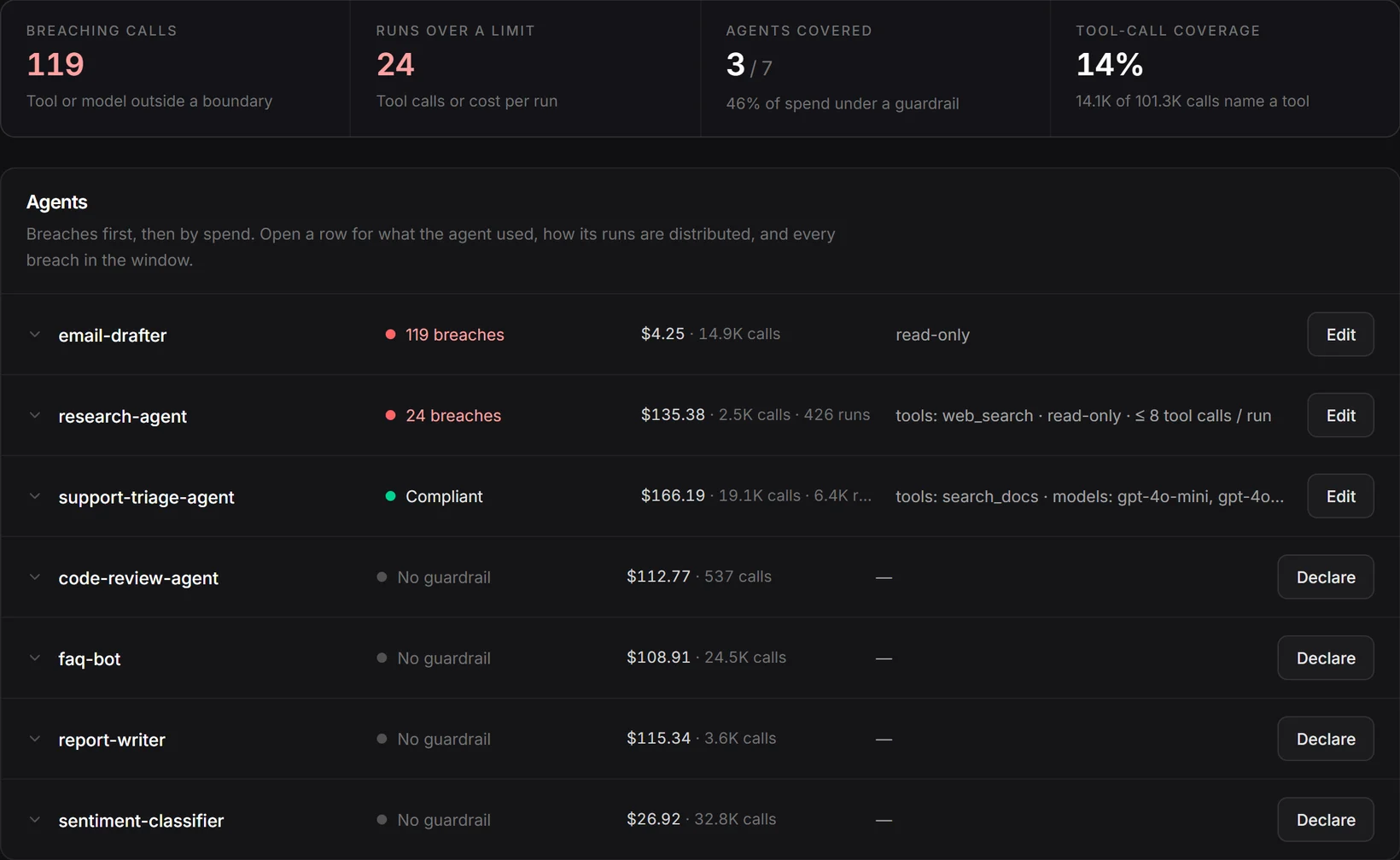
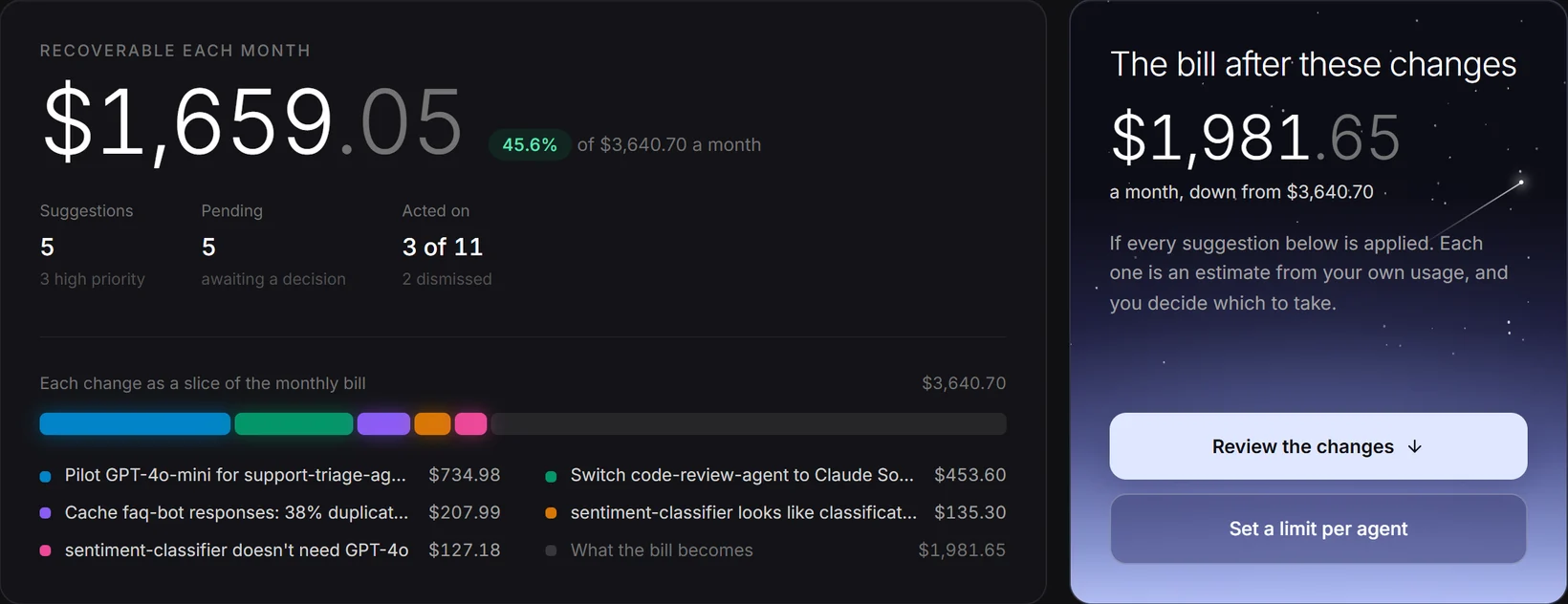
Each saving as a slice of the bill, with the change to make. Derived from your own usage. No model calls, no prompt content.
Priced before it ships
agentcost analyze prices the next version locally, and fails CI on a high finding.
New models, same week
Prices for 3,500+ models, synced daily.
Python and TypeScript
OpenAI, Anthropic, Gemini, LangChain, AI SDK. Streaming included.
Metadata only
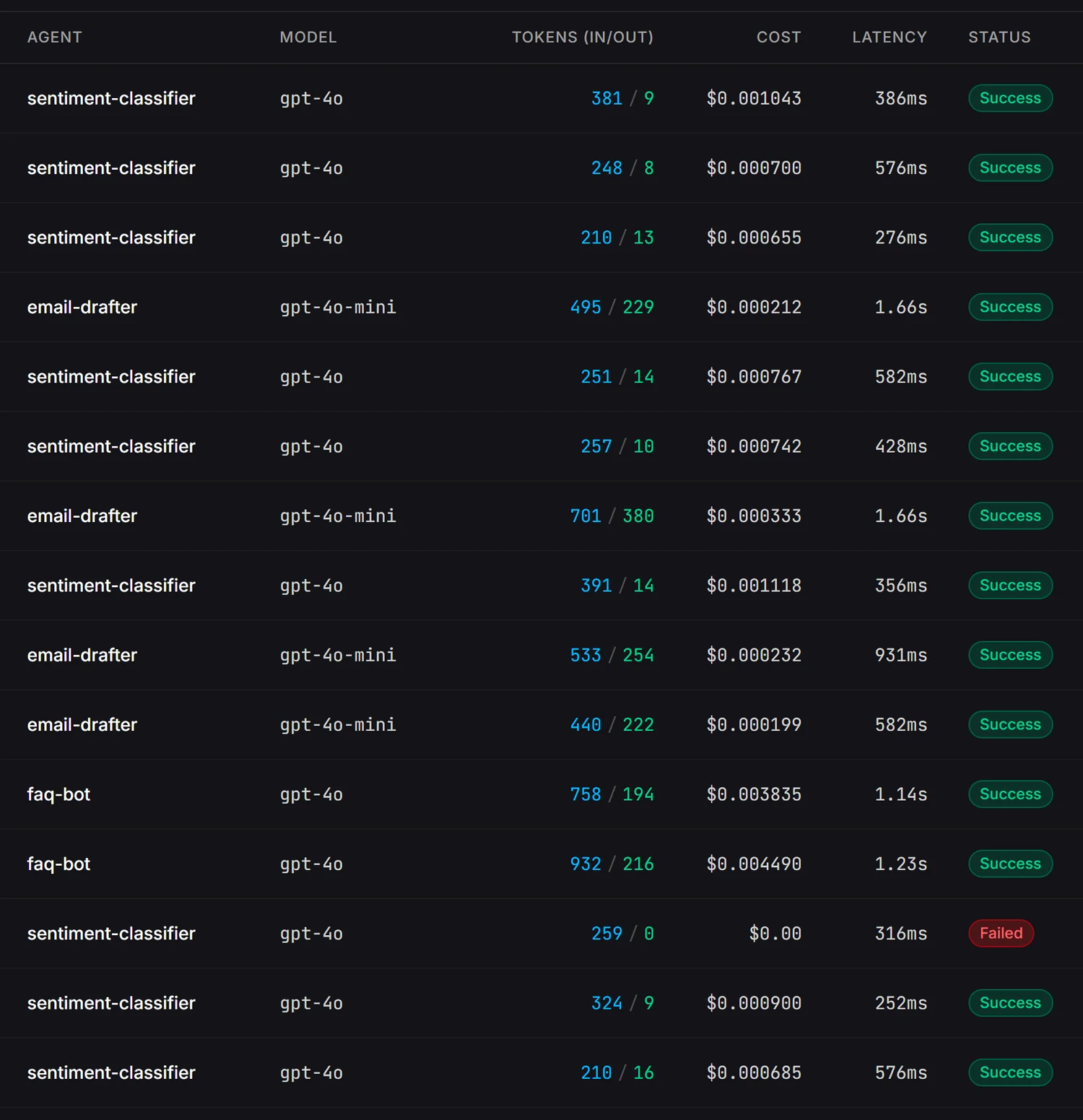
Token counts and timings. Never your prompts.
Not a forecast. Each of these was raised on the NovaDesk demo project this week, on the row you see marked.
$1,659
a month in savings across 5 suggestions: 45% of the project's spend, each with the change to make.
+21.7%
week on week for claude-code, the fastest-growing line on the bill.
283
runs re-ran a call they had already made, word for word: $18.29 this week for nothing new.
3.4%
of calls fail and are billed anyway: 848 failed calls this week.
14 tok
the longest answer in 33,451 calls. It classifies; it never needed a model priced to write.
122
guardrail breaches this week: send_email called in read-only mode.
Call init before your clients are created. OpenAI, Anthropic, Gemini and LangChain calls are priced from then on. Your code, and what it returns, stays the same.
Wrap a run to get its cost per run, per step and per tool, and to see loops. Optional: an unnamed call is still priced, just not attributed.
Spend by agent, model, workflow and step, what moved, and what to change. Also as a weekly PDF for finance, or ask from Claude or Cursor through the MCP server.
The SDK is a metadata-only tracker. Below is the event log as you'd see it: what each call cost, and how. Look for the prompt or the response. Neither is there.
Verifiable, not promised
The wire payload is documented field by field, and each field links to the open-source SDK line that builds it.
Hashed, not stored
Duplicate detection uses a SHA-256 digest computed locally from the prompt. Only the one-way digest leaves your process.
Self-host for zero exposure
The same MIT-licensed stack runs on your infrastructure with Docker. No telemetry, no phone-home.
Getting Started
Technical
Pricing & License
Weighing up alternatives? Honest side-by-side breakdowns:
Have another question? Read the docs · Open a GitHub issue
Free hosted cloud, or the same MIT-licensed stack on your servers. Two minutes to the first priced call. No card.
One email when one of them changes price or gets a retirement date. Nothing else, and one click to stop.